











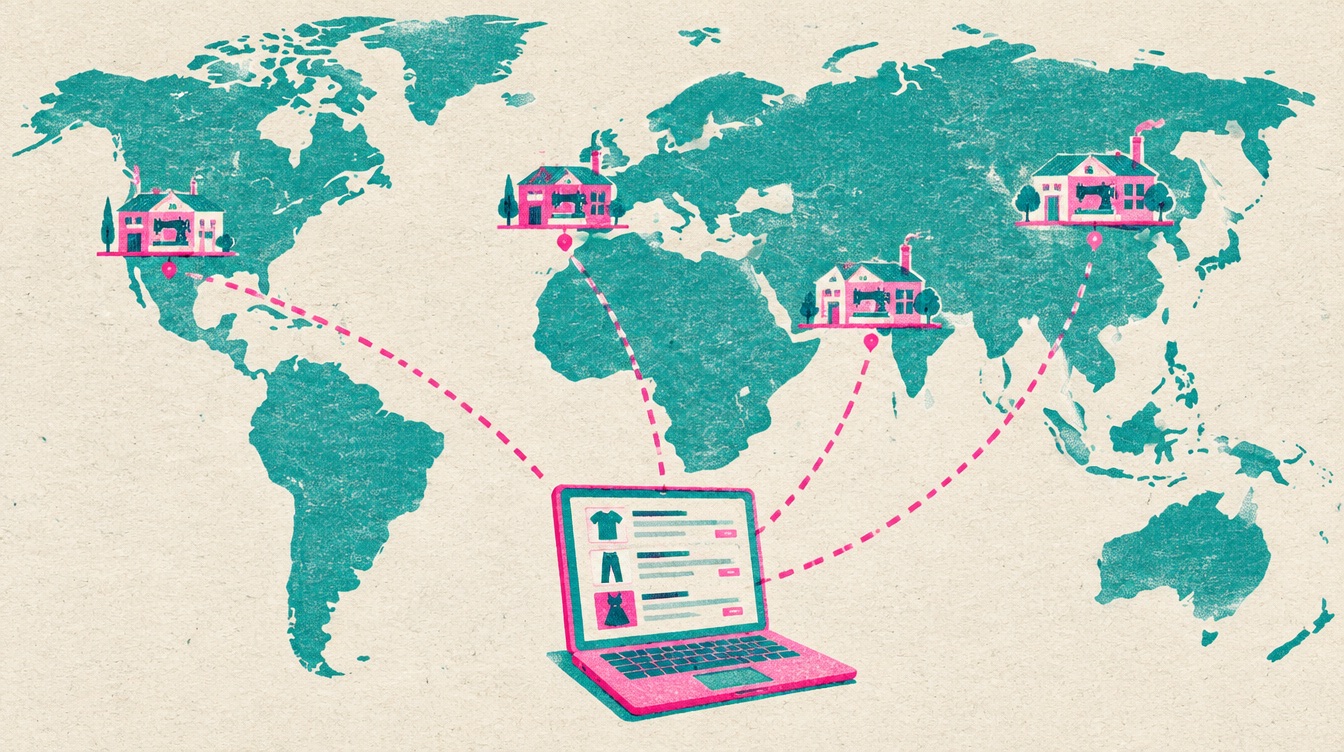
Alibaba is the default place to start looking for a clothing manufacturer, and for good reason: it is enormous, the search works, and its Trade Assurance programme gives buyers a route to dispute an order. Brands still look elsewhere, and the complaint we hear from them barely changes: it's hard to tell which listings are real factories and which are trading companies, and the choice gets thinner once you want to produce outside China or need a garment built to your own tech pack. A catalogue only takes you so far.
This guide is for brands and importers looking for a manufacturer. We compare the main options on the four things an apparel buyer cares about: where the suppliers are, how they are vetted, how you pay, and what kind of order each one suits.
Disclosure: this is Lalaaji's blog, and Lalaaji is one of the options below. We have tried to describe the other platforms fairly, based on what they publish about themselves as of October 2026. Check their current terms before you sign up.
Quick comparison
| Option | Supplier base | Best for | Vetting | Payment protection |
|---|---|---|---|---|
| Alibaba.com | Mostly China, plus many other countries | Catalogue and lightly customised products, wide choice | Verified Supplier badges, third-party audits on some suppliers | Trade Assurance on qualifying orders |
| Lalaaji | Pakistan, Turkey, Vietnam, India and others | Built-to-order apparel and sportswear, EU and UK buyers | KYC and factory checks on verified sellers | Milestone-based payment held by Lalaaji on orders placed through it |
| Sewport | Global | Brands that want quotes plus design and development support | Platform vetting (see their site) | Escrow, per their homepage |
| Maker's Row | USA only | Made-in-USA production | Profiles vetted before they appear in search | Arranged with the factory |
| Foursource | Global, strong in Europe and Asia | Larger buyers also sourcing fabrics and trims | Supplier profiles with compliance data | Arranged with the supplier |
| Sourcify | Global | Brands that want factories matched to a project | Pre-vetted factories bid on your project | See their site |
| Trade fairs and sourcing agents | Depends on fair or agent | Meeting factories in person; complex programmes | You (or your agent) do it | Your contract |
1. Lalaaji
Lalaaji is a B2B marketplace for built-to-order apparel and textiles. You post a request for quotation with your tech pack or brief, verified manufacturers send quotes (usually within 48 hours), and you compare them, request samples and award the order. Orders placed and paid through Lalaaji are covered by payment protection: we hold the funds and release them as sampling, production and delivery milestones are met. The operating company is Lalaaji Netherlands B.V. in Rotterdam.
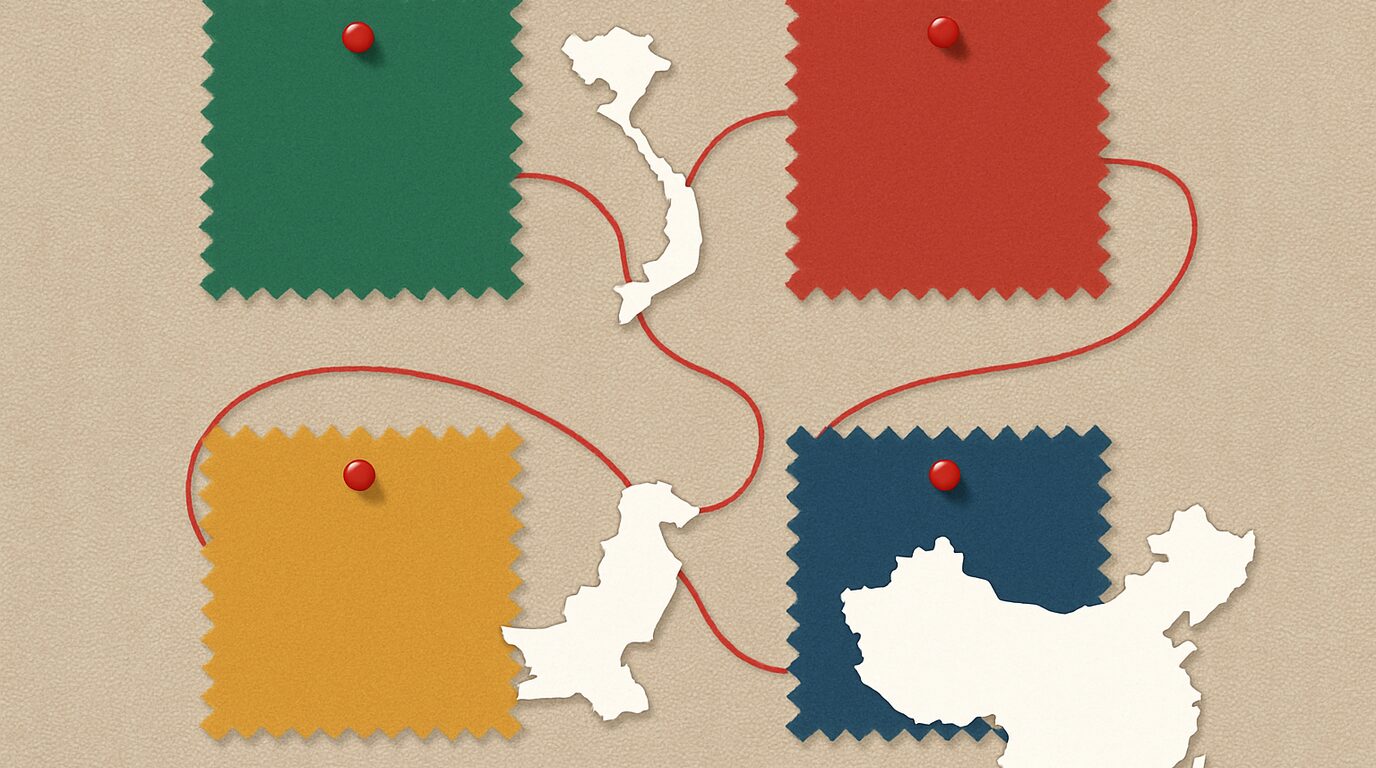
Our supplier base is strongest in Pakistan, especially Sialkot for sportswear, team uniforms and fightwear, plus Turkey, Vietnam and India. Product listings show minimum order quantities and tiered wholesale prices in USD, so you can see roughly what an order will cost before you ask for a quote.
Lalaaji fits brands and importers in Europe, the UK, North America and the Middle East who want custom production outside China and prefer to pay against milestones. If you want ready-stock items from China at the lowest possible unit price, one of the large marketplaces will serve you better. We are the wrong place for that order.
2. Sewport
Sewport is a UK-based platform that connects brands with clothing manufacturers. You post a project and get quotes, and its homepage says payments go through escrow. It also offers development services such as pattern making, sampling and grading, and its "learn" section and country manufacturer pages are useful reading even if you don't use the platform. Smaller brands that want help developing a product, as well as a factory to make it, will find a good match there.
3. Maker's Row
Maker's Row lists manufacturers in the United States only. Profiles are vetted before they appear in search. Posting a project and receiving bids is free, but messaging factories directly needs a paid plan.
Use it if made-in-USA is part of your brand and your margins can carry US labour costs. For most cut-and-sew categories the unit price will be well above Asia or Turkey, offset by short shipping and easy communication. Patriotism on the label costs money, and the customer has to be willing to pay for it.
4. Foursource
Foursource is a Germany-based B2B network for apparel, fabrics and trims. Buyers can search suppliers, send detailed price requests and track compliance documents. The platform is built for established brands and retailers whose sourcing teams manage many suppliers and also buy fabric and trims directly.
5. Sourcify
Sourcify describes itself as a sourcing platform where pre-vetted factories bid on your project after you post it. If you would rather receive a shortlist than search a directory yourself, it's worth a look.
6. Other large marketplaces: Global Sources and Made-in-China.com
These work much like Alibaba: big catalogues, mostly Chinese suppliers, supplier verification badges and trade-show heritage (Global Sources started as a trade magazine and fair organiser). They are worth checking alongside Alibaba if you are sourcing from China anyway, because the same factory sometimes lists on all three with different minimums.
7. Trade fairs and sourcing agents
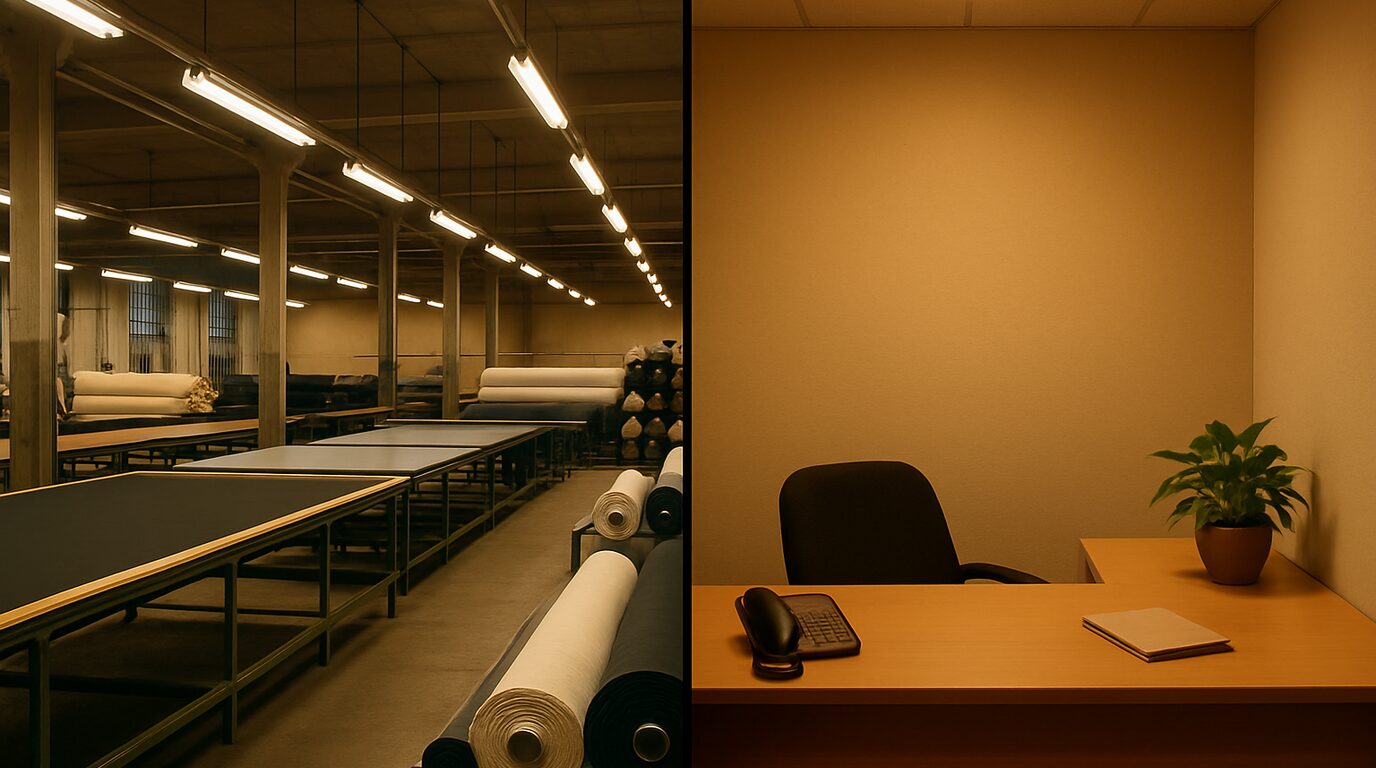
Meeting factories in person is still the fastest way to judge them, and a walk through the cutting room tells you more than any product photo. In Europe, the big apparel sourcing fairs run in Paris, Munich and Istanbul. In producer countries there are national textile fairs in Karachi, Lahore, Istanbul, Ho Chi Minh City and Dhaka. Bring your tech pack, your target price and your annual volume, and book factory visits for the days after the fair.
A sourcing agent will shortlist factories, negotiate and follow production, usually for a percentage of order value. A good agent is worth that for complex programmes. A bad one is a trading company in disguise. Ask for references, and ask how they are paid.
How to choose
The big question is which channel fits the garment you want made. Start with the product and where it should be made, then pick the channel.
Catalogue items with your logo added are easy to find on the large marketplaces. Think of Alibaba as the department store of sourcing: huge choice, ready on the rail, and your label sewn in on request. A garment built to your own tech pack is a tailor's job. It needs a factory that develops samples, and those factories are easier to reach through a build-to-order platform or an agent.
Decide on the country before the platform, since each country is strong in different categories. Our guide to the best country to manufacture clothing compares Vietnam, Turkey, Pakistan and China by product, order size and calendar.
Then think about payment. A 30% deposit and 70% balance by bank transfer is normal in apparel, and once that balance leaves your account you have little leverage if the goods arrive wrong. Paying the full balance before anyone has inspected the goods is a gamble. Escrow, milestone payments or a third-party inspection before the balance all reduce that risk.
On any platform, check whether the supplier actually owns the factory. Here is how to tell a factory from a trading company, and here is what Lalaaji checks before marking a seller verified.
Whichever route you choose, send every supplier the same brief so the quotes can be compared. Our apparel RFQ guide has a checklist.
Should you leave Alibaba completely?
Most brands are better off keeping it. Many use Alibaba for simple items and trims while using a build-to-order platform or an agent for their core garments. Spreading production across two countries also protects you when one country has a disruption; see dual sourcing for apparel.
If you run a factory and are deciding where to list, read our seller-side comparison: Alibaba alternatives for clothing manufacturers.
If you want to test the build-to-order route, post one style as an RFQ and compare the quotes with what you see on Alibaba for the same specification.
Your questions answered
Where can I find clothing manufacturers online?
Besides Alibaba, the main options depend on the product and the country. For custom apparel made outside China with milestone payment protection, a build-to-order platform such as Lalaaji or Sewport fits. For US production, Maker's Row. For large sourcing teams also buying fabric, Foursource. For catalogue products from China, Global Sources and Made-in-China.com work much like Alibaba.
Is Alibaba safe for buying clothing in bulk?
Yes, if you use Trade Assurance, check whether the supplier is a factory or a trading company, approve a pre-production sample, and inspect the goods before paying the balance. Most problems we hear about come from skipping one of those steps.
Where can I find clothing manufacturers outside China?
Build-to-order platforms that specialise in other countries (Lalaaji covers Pakistan, Turkey, Vietnam and India), country-specific directories, national trade fairs, and sourcing agents based in the producing country.
Do Alibaba alternatives have lower MOQs?
Sometimes. MOQ is set by the factory and depends on the fabric and the process. Platforms that show MOQs on every listing make it easier to find low-minimum factories quickly.